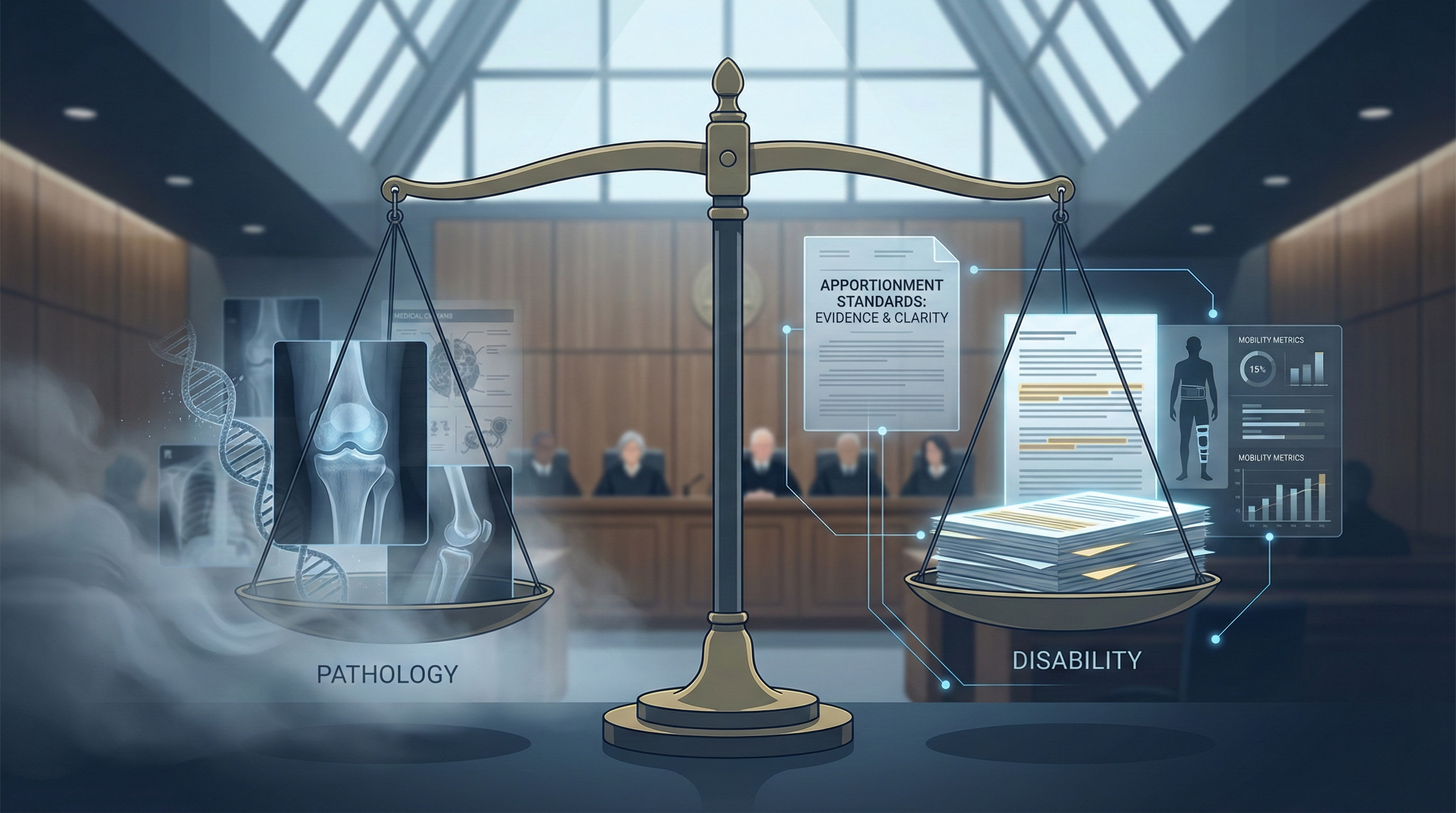
The landscape of apportionment in California workers' compensation law is undergoing a subtle but significant transformation. Recent panel decisions from the WCAB suggest a tightening of standards regarding non-industrial factors, specifically focusing on the substantial evidence requirement for medical reporting.
Key Takeaways
- "Vague speculation" regarding genetics is no longer sufficient.
- QMEs must bridge the gap between pathology and disability.
- Defense counsel must proactively depose physicians on the "how and why".
The Burden of Proof Revisited
Under Labor Code ยง 4663, apportionment to causation must be based on substantial medical evidence. Historically, physicians have often relied on general statements regarding age-related degeneration or "natural progression" of pre-existing conditions. However, the Escobedo standard requires that a physician explain how and why these non-industrial factors are causing a percentage of the current permanent disability.
In the recent City of Jackson v. WCAB (Rice), the appellate court reminded practitioners that apportionment cannot be based on "pathology" alone. The distinction is critical:
"Disability is not the same as pathology. A patient may have severe arthritis (pathology) yet be fully functional (no disability) until an industrial injury occurs. To apportion, the doctor must show that the arthritis would have caused disability by now, absent the injury."
Analyzing the "Genetics" Argument
A common trend in QME reporting is the attribution of disability to "genetic predisposition" or "constitutional factors." While permissible under Acme Steel, this requires more than a conclusory statement.
Our analysis of 450 recent QME reports processed through the CompFox platform shows a 15% increase in WCJ rejections of apportionment findings where the physician cited "genetics" without referencing specific family history or medical literature applicable to the specific applicant.
Strategic Implications for Defense
For defense firms, this means that a report simply stating "50% to genetics" is vulnerable. To protect this apportionment, counsel should:
- Request a supplemental report asking the QME to detail the specific mechanism of the genetic factor.
- Ensure the QME discusses the natural history of the condition absent the industrial injury.
- Cross-examine the physician on whether they are apportioning pathology or disability.
In conclusion, while the statutes haven't changed, the judicial tolerance for "rubber-stamped" apportionment is waning. Precision in medical-legal reporting is now the baseline requirement for a defensible record.